
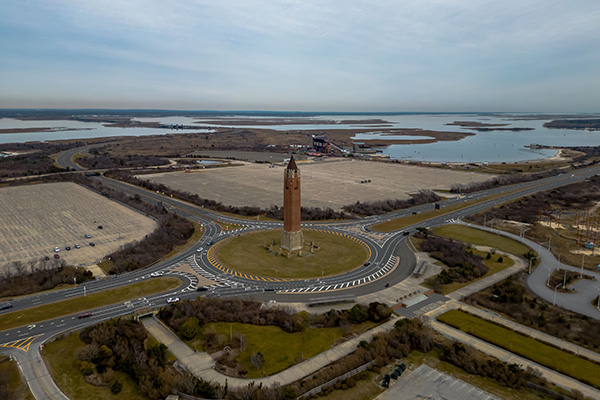
Overview of Long Island
Long Island is one of the most significant regions in New York State and occupies a large area in the southeastern part of the state. It combines a long history, high population density, a developed economy, diverse natural areas, and an important transportation network.
Thanks to this, the island has become not only a geographical object but also an important part of the cultural and social structure of the New York metropolitan area.
Key features of Long Island:
- The largest island in the contiguous United States in terms of area
- Part of the New York metropolitan area with a population of over eight million
- Diverse ethnic structure with extensive waves of migration
- Developed an economy based on biotechnology, engineering, scientific research, and aviation
- The largest airports in the region, including JFK and LaGuardia
- One of the busiest transportation systems, including the Long Island Rail Road
- A popular tourist region with wineries, natural landscapes, and beaches
- A historic center of American aviation and scientific development
Geographical location and structure of the island

Long Island stretches 118 miles eastward from New York Harbor. Its four counties comprise both urban and suburban areas. Kings and Queens are boroughs of New York City, while Nassau and Suffolk form a separate administrative area.
The north of the island faces Long Island Sound, while the south coast faces the Atlantic Ocean. The eastern part is divided into two long peninsular areas known as North Fork and South Fork. These areas include rural landscapes, wineries, nature reserves, and coastal settlements.
The island is connected to Manhattan and the mainland by bridges, tunnels, and ferries. It preserves a variety of natural areas, including the Pine Barrens and coastal barrier islands.
History
The history of Long Island spans a long period from the first indigenous peoples to modern metropolises and scientific centers. The island’s development has gone through several key stages.
Early settlements and indigenous peoples
The first inhabitants appeared on the island after the end of the last ice age. Over thousands of years, groups of hunters and fishermen formed, gradually transitioning to more complex forms of economy. Native American communities developed agriculture, built permanent settlements, created pottery, and participated in trade networks with neighboring tribes.
Different groups in different parts of the island spoke related but distinct dialects of Algonquian languages. The communities maintained kinship ties with the peoples of Connecticut, Rhode Island, and New England.
Period of European exploration and early colonization
Contact with European explorers began in the early 16th century. In the 17th century, the island became a target of interest for Dutch and English colonists.
The Dutch occupied the western parts of the island, while the English settled in the east. These years were characterized by trade, land deals, and conflicts between European powers and local tribes.
In 1664, the territory came under English control and was later incorporated into the province of New York. By the end of the 17th century, the counties of Kings, Queens, and Suffolk had been created, which became the basis for the future administrative division.
The 18th century and the American Revolution
During the American Revolution, Long Island became the site of one of the most significant early battles. After the British troops’ victory, the island became the center of their strongholds for several years. Local communities were divided between supporters of independence and supporters of the British crown. An intelligence network known as the Culper Ring operated on the island, passing important information to the leadership of the Continental Army.
19th Century
In the 19th century, Long Island began to change rapidly. The creation of the Long Island Rail Road in the 1830s was a turning point. The island gradually transformed from a rural region into an area with developing urban centers. By the end of the century, parts of Long Island had become part of New York City, and the north shore became a popular location for the construction of luxurious country residences.
20th century
The beginning of the 20th century was a time of development for aviation and large technology companies. Charles Lindbergh made his famous flight from Long Island. Aviation and engineering companies that participated in the creation of aircraft and space systems operated on the island.
After World War II, Long Island became a symbol of American suburbanism. The cities of Nassau and western Suffolk were rapidly built up with new residential areas, and their populations grew quickly.
21st century
By the 21st century, a significant portion of the industrial areas had been converted into commercial, residential, or cultural spaces. Brooklyn became an international center for art and technology. The eastern regions developed the wine industry, tourist routes, and environmental projects.
Economy and infrastructure
Long Island’s economy is one of the largest in the state. It is based on scientific research, medicine, education, biotechnology, and engineering. The island’s research centers are among the leading ones in the country.

The transportation system includes international airports, an extensive network of highways, railways, and ferries that connect the island to Connecticut and other regions.
Long Island is a unique combination of historical layers, cultural diversity, and modern economic processes. It combines the heritage of indigenous peoples, a rich colonial history, industrial growth, scientific discoveries, and modern urban development. As a result, the island continues to play a key role in the life of the New York metropolitan area and remains one of the most dynamic regions in the United States.